Table of Contents
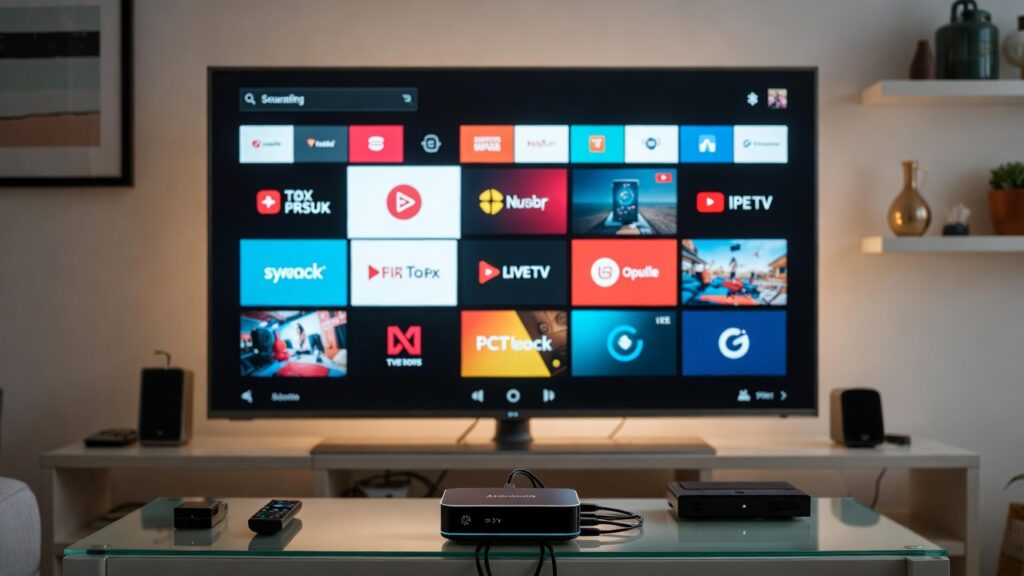
In an era where entertainment is just a click away, IPTVTrends 2026 are set to redefine how we consume content. Imagine curling up on your couch, seamlessly switching between live sports, blockbuster movies, and personalized recommendations—all delivered in stunning 8K resolution on your Smart TV. As streaming technology evolves, IPTV (Internet Protocol Television) is at the forefront, blending traditional broadcasting with cutting-edge digital innovation. With global internet speeds soaring and devices like Android TV becoming household staples, 2026 promises a golden age for viewers seeking affordable, flexible, and immersive experiences. This article dives deep into the iptvtrends 2026, exploring their impact on Smart TVs, Android TV, advantages, use cases, and future predictions—empowering you to stay ahead in the streaming revolution.
What is IPTV and Why It Matters in 2026
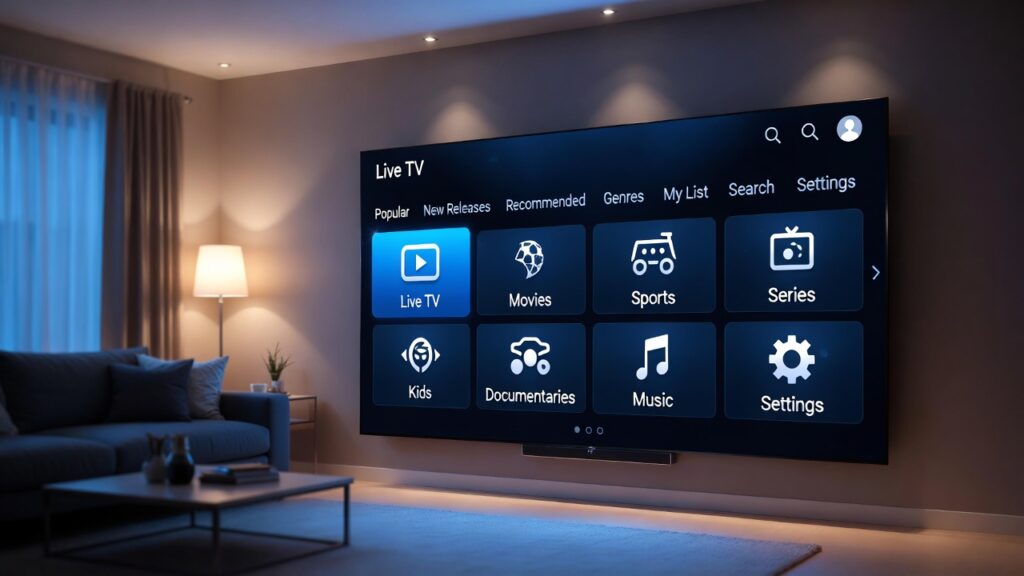
IPTV, or Internet Protocol Television, delivers television content over the internet rather than traditional cable or satellite methods. Unlike standard broadcasting, IPTV uses IP networks to stream live TV, on-demand videos, and interactive features directly to your devices. In 2026, iptvtrends are gaining momentum due to the rise of high-speed 5G and fiber-optic connections, making buffer-free streaming a reality even in remote areas.
Why does IPTV matter now? Traditional TV is declining, with cord-cutting at an all-time high. According to industry reports, over 60% of households will rely on streaming services by 2026, and IPTV bridges the gap by offering cable-like reliability with the flexibility of apps. For beginners, think of IPTV as Netflix on steroids—it combines vast libraries, live channels, and customization without hefty subscriptions. As Smart TVs and Android TV platforms integrate IPTV natively, users enjoy seamless access to global content, from local news to international sports.
The appeal lies in its accessibility. With affordable plans starting under $10/month for legal providers, IPTV democratizes entertainment. In 2026, trends like AI-driven recommendations and VR integration will make IPTV indispensable for tech-savvy families, travelers, and binge-watchers alike.
The Evolution of IPTV: From Traditional TV to Smart Streaming
IPTV’s journey began in the early 2000s as a niche technology for telecom companies. Back then, it was limited by slow internet speeds and basic interfaces. Fast-forward to today, and iptvtrends 2026 reflect a massive evolution driven by advancements in hardware and software.
Traditional TV relied on antennas or cables, restricting viewers to scheduled programming. IPTV flipped the script by enabling on-demand viewing, but early versions struggled with latency. By 2010, services like Hulu and YouTube TV paved the way, introducing live streaming over IP. The real game-changer came with Smart TVs—devices from Samsung, LG, and Sony that embed streaming capabilities.
In 2026, IPTV has matured into a hybrid ecosystem. Android TV, Google’s operating system for televisions, plays a pivotal role by supporting thousands of apps and seamless IPTV integration. Platforms like Google TV enhance this with voice search and universal watchlists. The shift to cloud-based IPTV means no more bulky set-top boxes; everything runs through apps on your Smart TV.
This evolution addresses pain points like content fragmentation. Users can now aggregate services—think combining Netflix, YouTube, and live IPTV channels into one interface. For beginners, this means less hassle switching apps and more time enjoying content. As 6G networks emerge, iptvtrends 2026 predict zero-latency streaming, making IPTV the go-to for live events like the Olympics or concerts.
Key IPTV Trends Shaping 2026
As we approach 2026, several iptvtrends are transforming the landscape. These innovations focus on user experience, technology integration, and sustainability, ensuring IPTV remains relevant in a crowded market.
Integration with Smart TVs
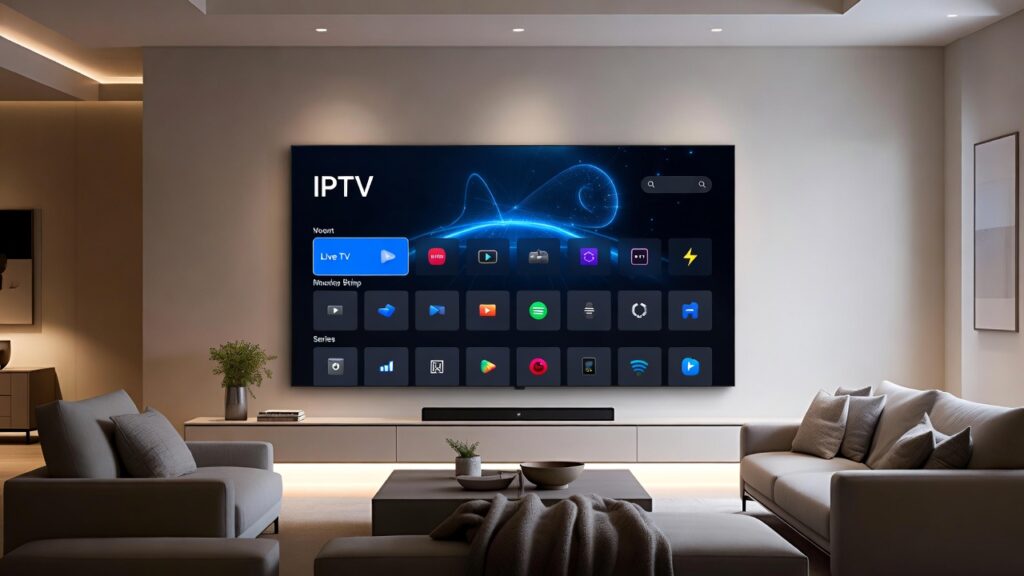
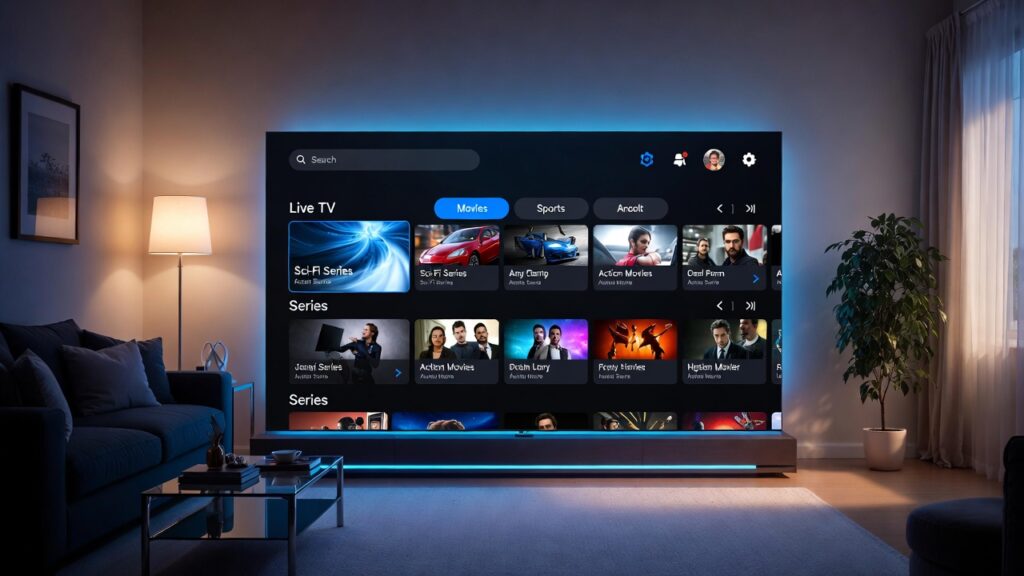
Smart TVs are the epicenter of iptvtrends 2026. Brands like Samsung’s Tizen OS and LG’s webOS now feature built-in IPTV support, allowing users to install apps directly. This eliminates the need for external devices, offering plug-and-play convenience.
For instance, voice assistants like Alexa and Google Assistant enable hands-free control: “Play the latest thriller on IPTV.” In 2026, expect AI-upgraded Smart TVs with predictive loading—pre-buffering content based on your habits. This trend benefits beginners by simplifying setup; just connect to Wi-Fi, download an IPTV app, and start streaming.
Advantages include energy efficiency and multi-room syncing, where content follows you from living room to bedroom. However, users must choose legal IPTV providers to avoid security risks.
Android TV’s Role in IPTV
Android TV is a powerhouse in iptvtrends 2026, powering devices from Sony, Philips, and NVIDIA Shield. Its open ecosystem supports over 10,000 apps, making it ideal for IPTV customization.
Trends include deeper integration with Google services—think Chromecast for effortless casting from phones. In 2026, Android TV boxes will feature 8K support and low-latency gaming modes, blending IPTV with interactive entertainment. Beginners appreciate the familiar Android interface, similar to smartphones.
Use cases range from live sports streaming to educational channels. Pros: Affordable hardware (under $50 for basic boxes) and regular updates. Cons: Potential for app overload if not managed.
AI and Personalization in IPTV
AI is revolutionizing iptvtrends 2026 by curating content tailored to your tastes. Algorithms analyze viewing history to suggest shows, reducing decision fatigue.
On Smart TVs, AI enhances picture quality with upscaling tech, turning HD into near-4K. Future predictions include voice-biased recommendations: “Show me comedies like Friends.” This personalization boosts engagement, with studies showing 75% higher retention rates.
For wellness seekers, AI could integrate fitness channels with health trackers. Beginners benefit from guided setups, where AI suggests optimal apps based on location.
8K and High-Resolution Streaming
By 2026, 8K TVs will be mainstream, and IPTV is adapting with ultra-high-definition streams. Trends include compressed codecs like AV1 for efficient bandwidth use.
Smart TVs with HDMI 2.1 support variable refresh rates for smooth playback. Android TV devices will handle 8K via cloud processing, offloading heavy lifting to servers.
Advantages: Immersive viewing for movies and sports. Use cases: Virtual tours or gaming. Predictions: Widespread adoption as prices drop, making 8K IPTV accessible.
Sustainability and Eco-Friendly Streaming
Iptvtrends 2026 emphasize green tech. Streaming consumes massive energy, so providers are shifting to renewable-powered data centers.
Smart TVs feature eco-modes that dim screens during pauses. Android TV apps optimize for low-power devices. This trend appeals to environmentally conscious users, with carbon footprint trackers in apps.
Predictions: By 2030, 50% of IPTV will be carbon-neutral, driven by regulations.
Advantages of IPTV in 2026
IPTV’s advantages make it a standout in 2026’s streaming world. Cost savings top the list—legal subscriptions average $15/month versus $100+ for cable. Flexibility allows viewing on any device, from Smart TVs to mobiles.
Quality is unmatched with adaptive bitrate streaming, adjusting to your connection for buffer-free experiences. Customization shines through playlists and multi-user profiles.
For families, parental controls ensure safe viewing. Businesses use IPTV for digital signage or employee training. Compared to traditional TV, IPTV offers global access, breaking geographical barriers.
Security improvements in 2026 include encrypted streams and VPN integration, protecting privacy. Overall, IPTV empowers users with choice, convenience, and control.
Use Cases for IPTV on Smart Devices
IPTV’s versatility shines in real-world applications. For home entertainment, families stream live events on Smart TVs, creating shared experiences.
Travelers use Android TV sticks in hotels for familiar content. Sports fans benefit from multi-screen viewing—watch games while checking stats.
Educational use cases include language learning channels on Smart TVs. Businesses deploy IPTV for corporate communications or waiting room entertainment.
In healthcare, IPTV delivers patient education videos. For seniors, simple interfaces on Android TV make navigation easy. These scenarios highlight IPTV’s adaptability in 2026.
Future Predictions for IPTVTrends
Looking ahead, iptvtrends 2026 predict integration with metaverse platforms, where IPTV becomes interactive VR experiences. AI will evolve to create dynamic storylines based on viewer input.
Smart TVs will incorporate haptic feedback for immersive sports. Android TV might merge with AR glasses for portable viewing.
Challenges include bandwidth demands, solved by edge computing. Predictions: IPTV market grows to $200 billion by 2030, driven by emerging markets.
Sustainability will be key, with green certifications becoming standard.
How to Get Started with IPTV in 2026
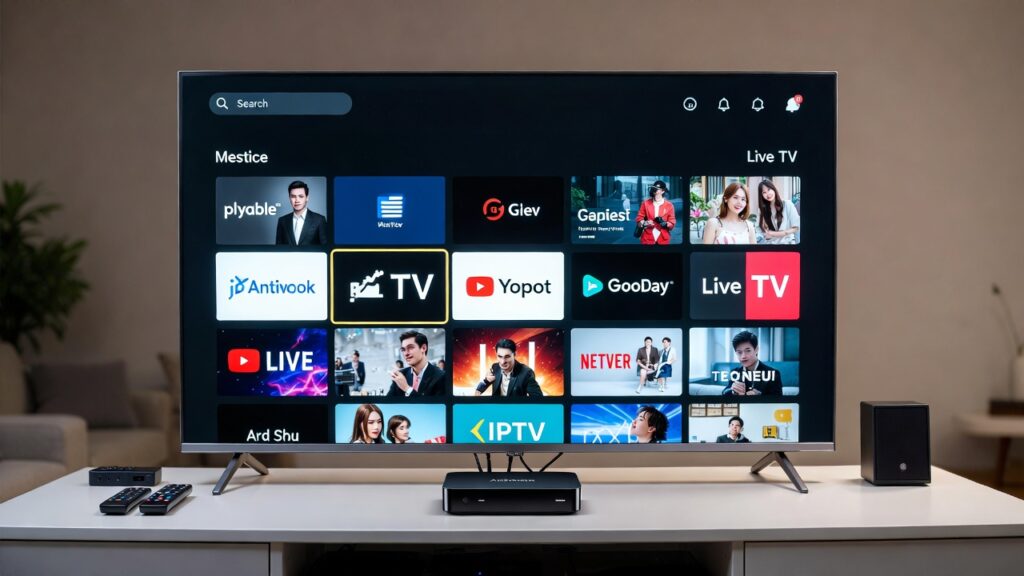
Beginners, start by choosing a legal provider—research reviews for reliability. For Smart TVs, download apps from the store.
On Android TV, install via Google Play. Set up involves entering credentials and customizing channels.
Tips: Use a stable connection (100Mbps+ for 4K). Secure with VPNs. Troubleshoot common issues like buffering by checking router settings.
In 2026, user-friendly apps make setup a breeze.
Conclusion: Embracing IPTVTrends 2026
IPTVTrends 2026 mark a pivotal shift in entertainment, blending innovation with accessibility on Smart TVs and Android TV. From AI personalization to 8K streaming, these trends offer endless possibilities for viewers. Advantages like cost savings and flexibility, coupled with diverse use cases, position IPTV as the future of media. As predictions unfold, embracing these changes ensures a richer, more connected experience. Whether you’re a beginner or tech enthusiast, now’s the time to explore IPTV’s potential.
[Insert high-quality real image of futuristic 8K IPTV streaming on a Smart TV]
FAQ
What is IPTV and how does it differ from traditional TV?
IPTV delivers content via internet protocols, offering on-demand and live streaming, unlike scheduled traditional broadcasts.
Are IPTV services legal in 2026?
Yes, licensed providers are legal; always choose reputable ones to avoid piracy issues.
How does Android TV enhance IPTV experiences?
Android TV’s app ecosystem and Google integration provide seamless customization and voice control for IPTV.
What are the bandwidth requirements for IPTV in 2026?
For HD, 10-20Mbps; for 4K/8K, 50-100Mbps or higher, depending on the service.
Can IPTV be used on multiple devices?
Absolutely—most services support Smart TVs, mobiles, and tablets simultaneously.
What future trends should I watch for in IPTV?
Look for AI, VR integration, and sustainable streaming practices dominating iptvtrends beyond 2026.